Lineage Divides
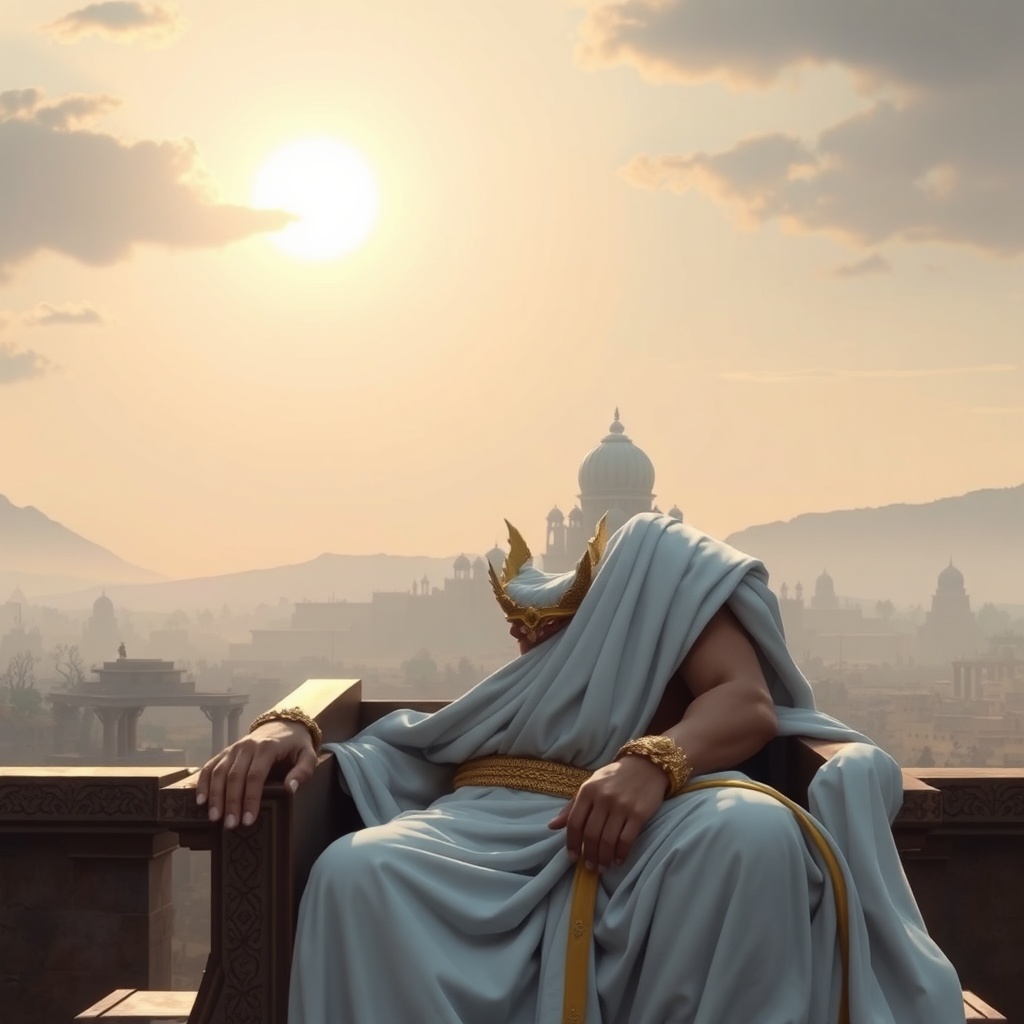
In the ancient kingdom of Hastinapura, the Kuru dynasty faced a profound schism. The blind king Dhritarashtra's hundred sons, the Kauravas, led by the ambitious and envious Duryodhana, grew up alongside their cousins, the five Pandava brothers, whose eldest, Yudhishthira, embodied unwavering righteousness. Though of the same lineage, the stark contrast in their natures and Duryodhana's refusal to acknowledge the Pandavas' birthright to the throne sowed the initial seeds of a conflict that would shake the very foundations of the world.
The Dice Game
The cunning Shakuni, Duryodhana's maternal uncle, orchestrated a treacherous dice game, inviting the righteous Yudhishthira, who, bound by honor and custom, could not refuse. In a rigged contest, Yudhishthira gambled away his kingdom, his wealth, his brothers, and finally, even himself. In a cruel climax, his wife, the beautiful queen Draupadi, was staked and lost. Her public humiliation by Dushasana, attempted disrobing in the royal court, became a profound violation of Dharma, averted only by Lord Krishna's divine intervention, leading to the Pandavas' thirteen-year exile.
Krishna's Counsel
After thirteen arduous years of exile, the Pandavas returned, seeking their rightful share of the kingdom. Lord Krishna, the divine charioteer and counselor, revered for his cosmic wisdom and gentle smile, attempted to mediate a peaceful resolution. He proposed a compromise: the Pandavas would be content with just five villages. However, Duryodhana, proud and arrogant, defiantly refused, declaring he would not yield even a needle-point of land without war. His stubbornness solidified the path to an inevitable, devastating conflict.
The War Begins
The vast armies of the Pandavas and Kauravas assembled on the sacred battlefield of Kurukshetra. As the war horns blared, Arjuna, the valiant warrior, found himself paralyzed by despair. He saw his revered elders, beloved teachers, and dear cousins arrayed against him, and the thought of shedding their blood shattered his resolve. It was then that Lord Krishna, his divine charioteer, delivered the profound spiritual discourse of the Bhagavad Gita, teaching Arjuna about duty (Dharma), the impermanence of the body, the eternal nature of the soul, and the importance of selfless action, urging him to fight for righteousness without attachment to the fruits of his labor.
Dharma's Triumph
The eighteen-day war of Kurukshetra raged, a cataclysmic clash of titans, ending with the Pandavas' victory, but at an immeasurable cost. The land was soaked in blood, and countless lives, including many revered figures on both sides, were tragically lost. Yudhishthira, the righteous eldest Pandava, ascended the throne of Hastinapura, burdened by the immense weight of his triumph and the sorrow of the devastation. The Mahabharata saga, through its epic battles, profound moral dilemmas, and the eventual triumph of Dharma, ultimately teaches that while the path of righteousness is arduous and fraught with sacrifice, it always prevails. It profoundly illustrates that all actions, whether righteous or unrighteous, bear their inevitable fruits, leaving a timeless legacy on human morality, duty, and the eternal struggle between good and evil.